
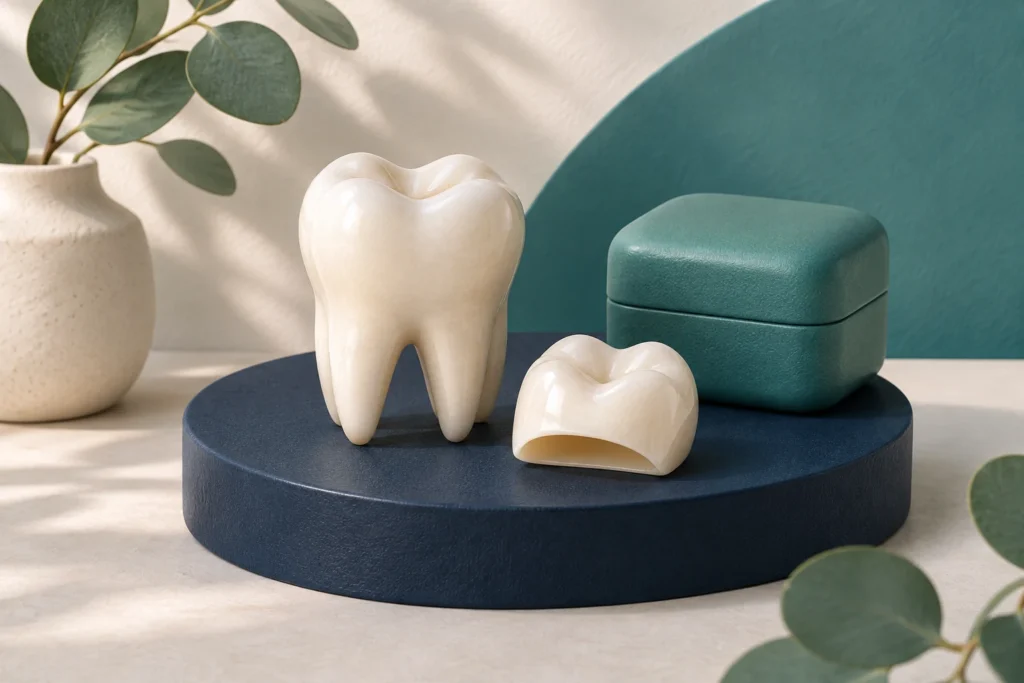
If a crown feels loose or comes off, contact your dentist for advice even if it does not hurt. The crown and the tooth underneath need assessment before deciding whether the restoration can be reused. Do not assume it only needs more cement.
Keep the crown and explain what happened
If it has come out, keep it safely in a container and bring it to the appointment. Tell the team whether the crown is temporary or permanent, whether it is on a natural tooth or an implant, and whether you noticed pain, swelling or a recent knock.
A crown that is still attached should not be pulled, twisted or tightened at home. If you are unsure whether part of a bridge or an implant component has moved, explain that uncertainty when you call.
Avoid improvised repairs
Do not use household glue or force a crown back into place. Ask the dental team how to manage the area until it can be checked. Avoid biting hard foods with the affected tooth. NHS Wales provides general advice on a lost filling or crown; local assessment remains important.
Report severe or increasing pain, swelling, fever or difficulty eating so the team can assess urgency. Breathing or swallowing difficulty or serious facial injury needs emergency medical attention rather than waiting for a routine dental appointment.
What the dentist may need to check
The review can consider the crown’s condition, its fit and bite, and the remaining tooth. A loosened crown may be associated with more than one problem, so a photograph or symptom description cannot establish the solution.
- Can this crown be reused, and what supports that decision?
- Is there damage or decay that needs treatment first?
- Would a temporary restoration be appropriate?
- What alternatives exist if the current crown cannot be retained?
The ADA’s crown information explains the broader role and limitations of these restorations.
Clarify the follow-up plan
Ask how to care for any temporary work, which symptoms should prompt another call and what the estimate includes. Recementing, repairing or replacing a crown are different decisions, and none should be promised before examination.
See Smile’s crowns and bridges information. If you need advice about timing, our urgent dental care page explains how to contact the team and describe the concern.
General information only. Individual assessment is needed for diagnosis and treatment advice.
Clinical Note: Any surgical or invasive dental procedure carries risks. Before proceeding, you should seek an opinion from an appropriately qualified dental practitioner. The information on this website is for general educational purposes only.