
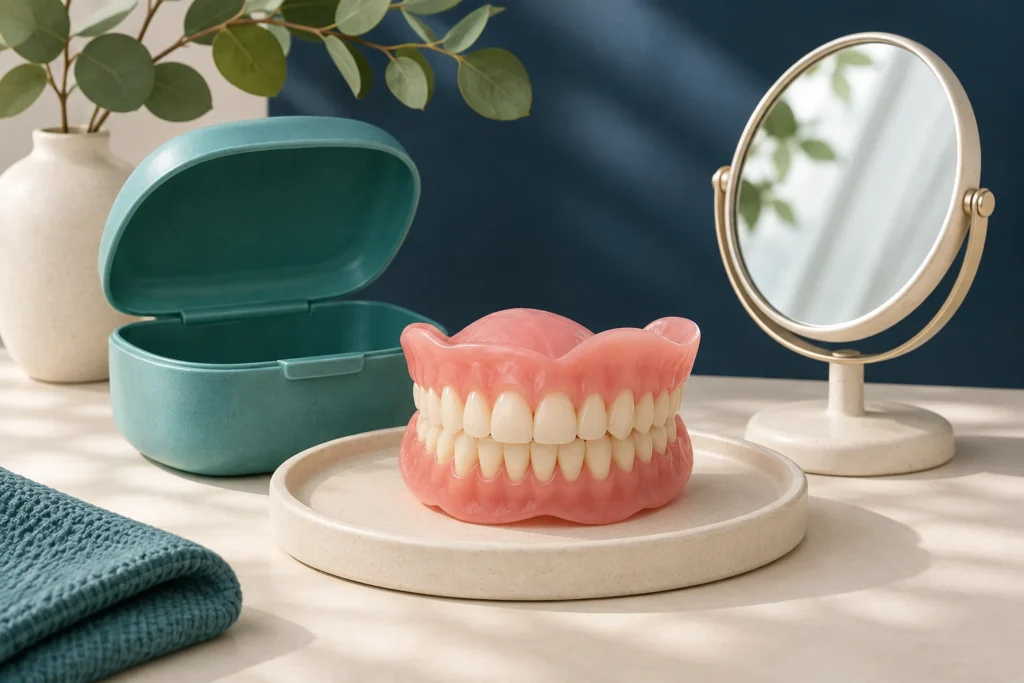
A denture that moves during eating, rubs a sore area or feels different from before is worth reviewing. The answer is not automatically a new denture or an implant. First, the clinician needs to assess the appliance, your mouth and what has changed.
Describe when the movement happens
Bring the denture, including any broken pieces, and explain whether it moves when you speak, bite or chew. Mention soreness, changes in the bite, recent extractions and any adhesive you use. If you have a partial denture, tell the clinician about changes around the remaining teeth too.
Healthdirect explains that dentures can need adjustments and ongoing care in its denture guide. Problems with fit deserve assessment rather than simply increasing adhesive.
Understand the possible options
An adjustment makes a targeted change to an appliance. A reline changes the fitting surface to better fit the tissues when suitable. Replacement involves making a new denture. Which option is reasonable depends on the condition and design of the existing denture, the bite and the mouth supporting it.
Ask for an explanation of why one approach is being recommended. Queensland Health’s denture patient information outlines limitations and possible complications of denture treatment.
- Is the problem localised or does the whole denture need reassessment?
- Would an adjustment or reline address it, and what would it not fix?
- Would I be without the denture during laboratory work?
- How many fitting or review appointments might be needed?
- What fees are included, and could further adjustment be necessary?
Do not alter the denture yourself
Filing, heating or gluing a denture can change its fit or damage it. Ask the team what to do while waiting for review, especially if there is a sharp edge or sore area. An adhesive is not a substitute for assessment of a poorly fitting appliance; see the ADA’s denture adhesive advice.
Review the mouth as well as the appliance
Report persistent soreness or a mouth lesion, even if you think rubbing is the cause. Ask about cleaning the denture, gums and remaining teeth, and agree on a review schedule.
Read Smile’s denture information and restorative options overview. A useful treatment plan starts with the reason for the changed fit, not an assumption that the most extensive option is needed.
General information only. Individual assessment is needed for diagnosis and treatment advice.
Clinical Note: Any surgical or invasive dental procedure carries risks. Before proceeding, you should seek an opinion from an appropriately qualified dental practitioner. The information on this website is for general educational purposes only.