
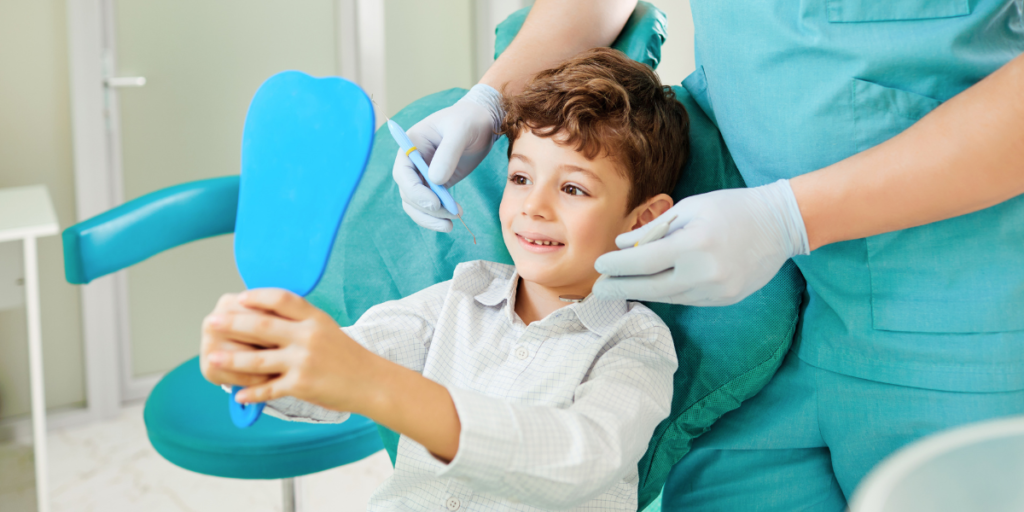
A child’s dental visit can include both a mouth check and advice for parents or carers. Preparing with simple, accurate explanations can make the appointment more familiar, but no clinic can promise that every child will feel relaxed.
When to arrange a first visit
The Australian Dental Association recommends a first dental visit when the first teeth appear. Do not wait for a routine visit if your child has pain, swelling, a dental injury or another concern.
When booking, tell the team your child’s age, medical history, communication or sensory needs, and any previous dental experiences that may affect care.
How to talk about the visit
Use straightforward language about having the teeth counted and checked. Reading a dental story or playing a gentle pretend check-up can help explain what might happen. Avoid frightening stories or using a dental visit as a threat.
Do not promise that nothing will hurt or that no treatment will be needed. Let the dentist explain proposed care in an age-appropriate way and agree how to signal discomfort.
What the dentist may discuss
A children’s dental assessment can include teeth and gums, development, brushing, toothpaste, eating and drinking habits. Cleaning, fluoride, fissure sealants or imaging are considered according to need rather than automatically.
If treatment is needed, ask about alternatives, benefits, risks and how appointments would be planned. Some children require referral to a paediatric dentist; treating children does not by itself mean a dentist holds specialist registration.
Check costs before treatment
For CDBS, eligibility and the available balance must be checked; not every child qualifies and not every procedure is covered. Ask the clinic about fees and claiming before care. Private health fund benefits are also policy-specific.
For ongoing care, agree a review schedule and ask for practical home-care advice. Call Smile Dental Clinic on 08 9022 7199 to discuss an appointment at 7/84–90 Brookman Street, Kalgoorlie.
Further reading: Australian Dental Association: first dental visits. This article is general information; individual assessment is needed for treatment advice.
Clinical Note: Any surgical or invasive dental procedure carries risks. Before proceeding, you should seek an opinion from an appropriately qualified dental practitioner. The information on this website is for general educational purposes only.