
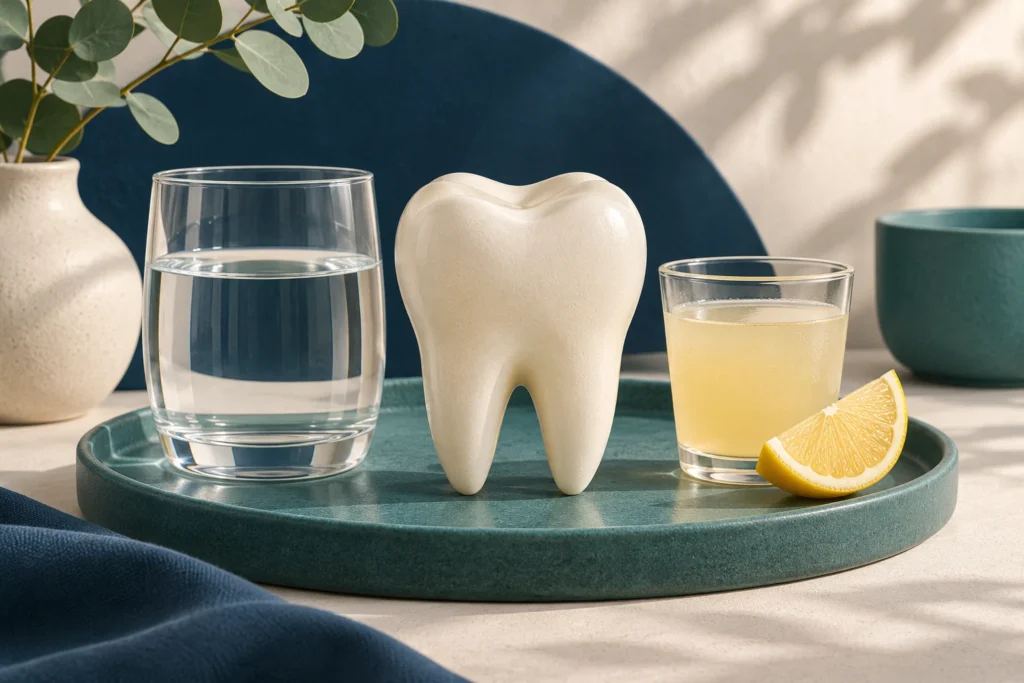
Tooth wear and tooth decay can both damage teeth, but they are not the same process. Understanding the difference helps explain why a dentist may ask about drinks, reflux, medicines and daily routines as well as brushing. It also helps avoid treating every sensitive tooth as a cavity.
Where the acid comes from is important
Dental erosion occurs when acids from sources such as food, drinks or the stomach dissolve tooth surfaces. Tooth decay involves acids produced by bacteria acting on sugars. The conditions can coexist. Healthdirect explains the distinction in its dental erosion information.
Wear can also involve mechanical forces, including tooth-to-tooth contact. An examination is needed to understand the pattern; a change in colour, shape or sensitivity does not identify the cause by itself.
Sugar-free does not always mean low-acid
A drink may contain little or no sugar and still be acidic. How often and how long teeth are exposed matters as well as the product. Queensland Health’s tooth wear guidance explains dietary and other contributors.
Before your appointment, note what you drink through a work shift, during sport and at home. Include water, flavoured drinks, juice, sports drinks and any products used for dry mouth. This is information for a practical discussion, not a reason to feel judged.
Discuss possible medical contributors
Mention reflux, repeated vomiting or persistent dryness. Your dentist may recommend speaking with your GP about a possible underlying cause. Do not change prescribed medicines yourself or assume that dental products alone can address a medical condition.
- Does the pattern suggest erosion, decay, another type of wear or a combination?
- Which daily changes are most relevant for me?
- What toothpaste and cleaning approach should I use?
- Would monitoring be appropriate, or is restoration needed?
- How will we check whether the problem is progressing?
Prevention and repair have different roles
A restoration can replace lost shape where clinically appropriate, but it does not remove the cause of ongoing wear. Likewise, toothpaste cannot regrow a missing piece of tooth. Ask for a plan that addresses both the cause and any treatment needed.
Read about decay prevention, sensitive teeth assessment and preventive dentistry at Smile. The right advice depends on what is affecting your teeth, not simply the label “weak enamel”.
General information only. Individual assessment is needed for diagnosis and treatment advice.
Clinical Note: Any surgical or invasive dental procedure carries risks. Before proceeding, you should seek an opinion from an appropriately qualified dental practitioner. The information on this website is for general educational purposes only.